Most people think AI development means sending a prompt to OpenAI. Real Full Stack AI is much bigger.
A prompt can create a demo. A product needs UI, backend orchestration, databases, authentication, retrieval, tool calling, evaluation, cost control, deployment, and a clear problem worth solving.
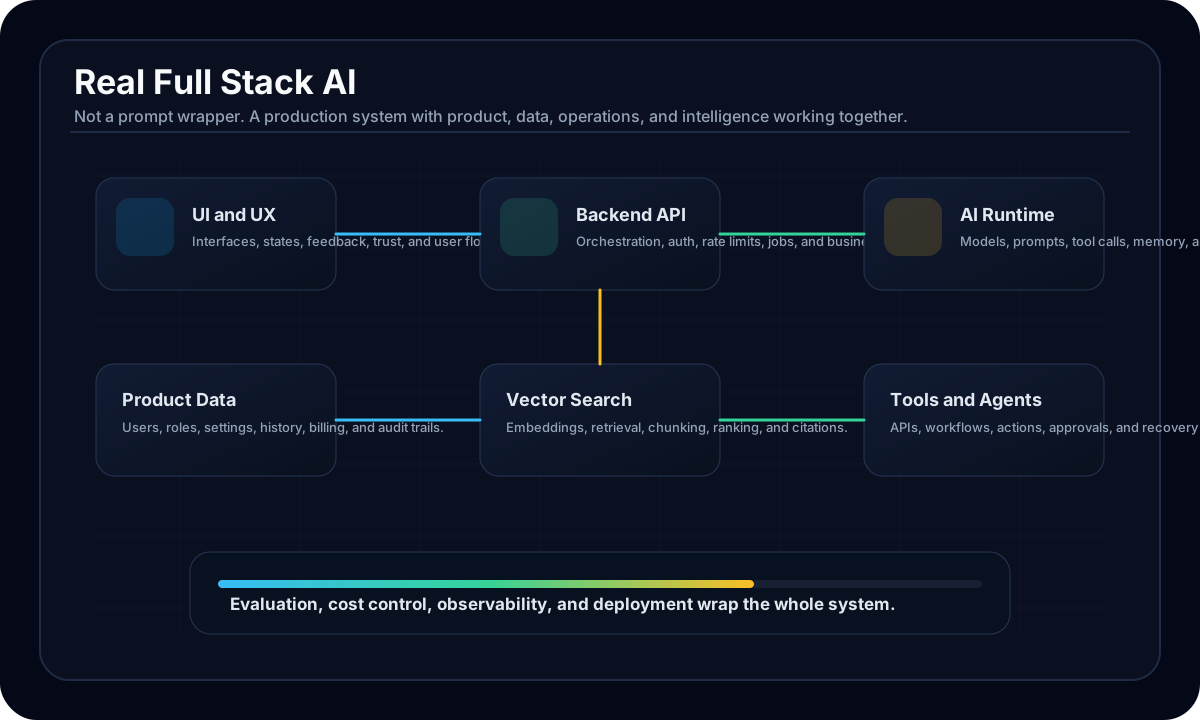
UI, API, data, retrieval, tools, eval, cost, deploy
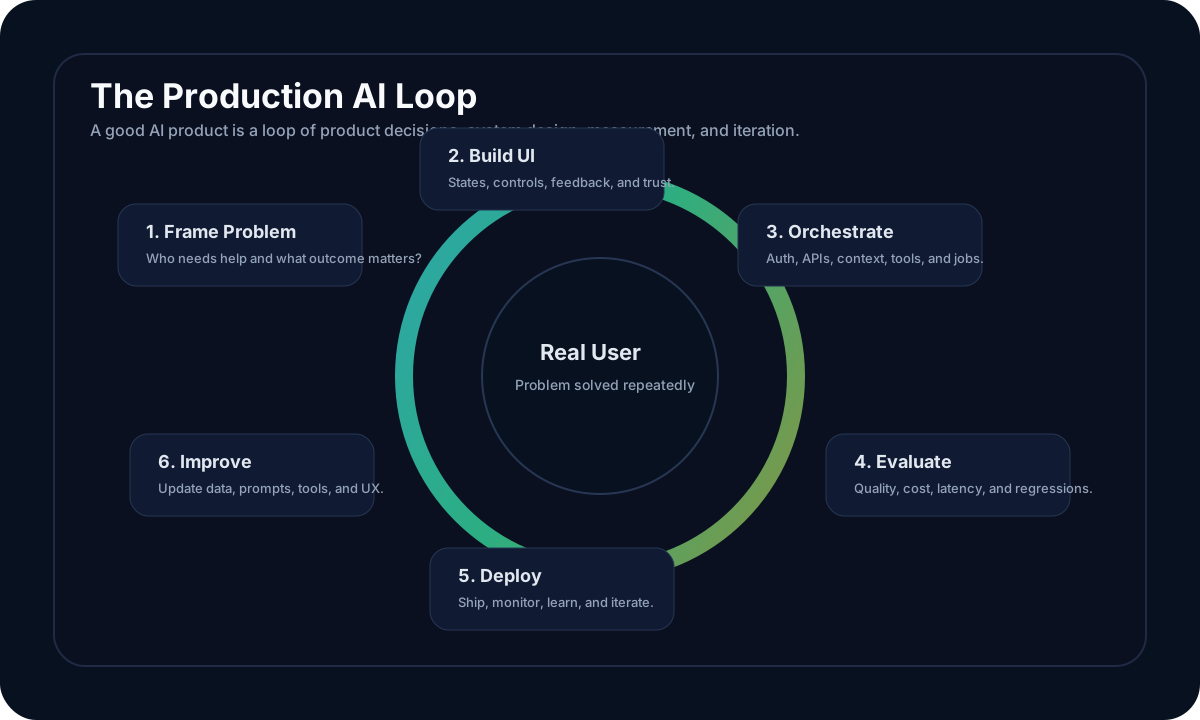
Solve the workflow, not only answer a prompt
Design, ship, measure, and improve
Core distinction
Prompt wrapper vs real AI product
A prompt box connected directly to an LLM
A guided workflow with UI states, validation, citations, and controls
No user identity or permission model
Auth-aware retrieval and tool access for each user, role, and tenant
Answers based on model memory
Answers grounded in databases, vector search, files, and product context
No idea what changed after release
Evaluation, logging, cost tracking, feedback, and monitoring
The prompt wrapper trap
A lot of AI projects start the same way: a text box, a submit button, and a call to an LLM API. It feels impressive because the model responds in natural language. But after the first demo, real questions appear.
Who is the user? What data is the model allowed to see? What happens when the response is wrong? How do you save history? How do you control cost? Can the AI take action? Can it be tested? Can it survive production traffic?
That is where real Full Stack AI begins. It is not the act of sending a prompt. It is the engineering discipline of turning AI into a reliable product that solves a real workflow.
A real AI product starts with the user interface
AI products still need good UI. In fact, they need better UI than normal software because users are interacting with a system that can be uncertain, slow, creative, or wrong.
A strong interface does not just show a chat box. It guides the user through the task. It shows loading states, source citations, confidence signals, editable outputs, action confirmations, and fallback paths. It gives users control instead of making them feel trapped inside a black box.
For example, a coworking space AI assistant should not only answer questions. It should help an operator find members, check room availability, draft invoices, summarize bookings, and approve actions before anything important changes.
The backend is the brain of the product
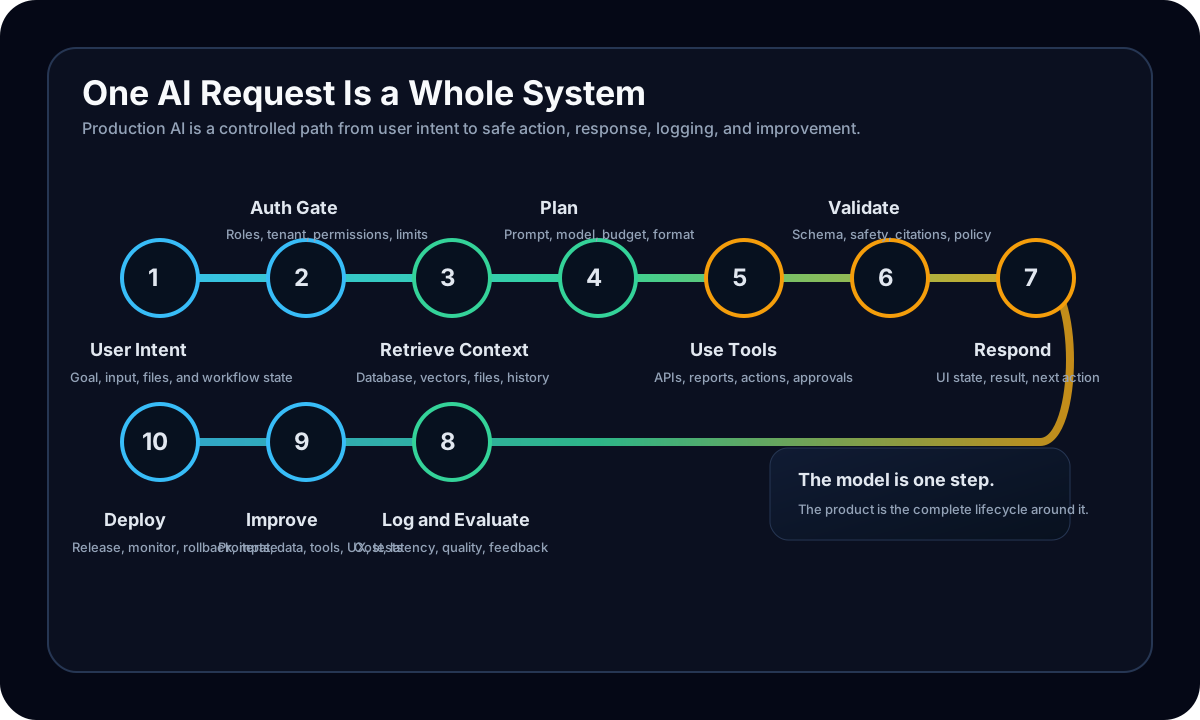
The backend is where AI becomes a system. It receives user intent, checks permissions, loads context, chooses tools, calls models, validates responses, saves results, and returns a clean output to the frontend.
Without backend orchestration, the application becomes fragile. The frontend sends raw prompts, secrets leak into the browser, prompts become impossible to manage, and business logic gets mixed with UI code. A production AI app needs a backend layer that owns the workflow.
This layer can also decide which model to use. A simple classification might use a smaller cheaper model. A complex planning task might use a stronger model. A search task might call retrieval first. A report generation task might run as a background job.
Databases make AI products remember and operate
Models do not replace databases. A real AI application still needs structured storage for users, teams, organizations, settings, permissions, messages, documents, logs, analytics, billing, and feedback.
If you are building an education platform, you need student progress, course records, quiz attempts, weak topics, and teacher dashboards. If you are building a coworking SaaS, you need spaces, bookings, members, plans, invoices, availability, reports, and admin actions.
The AI layer should sit on top of this data, not replace it. The product database gives the AI real business context, and the AI gives the database a more intelligent interface.
Authentication decides what the AI is allowed to know
Auth is not optional. An AI system that ignores identity and roles can become dangerous quickly. A user should only retrieve documents, records, analytics, or actions they are allowed to access.
Good AI engineering connects authentication with retrieval and tool permissions. The backend should know the current user, organization, plan, role, and allowed actions before it sends context to the model. The AI should never become a shortcut around application security.
Vector search turns private knowledge into useful context
General models are powerful, but they do not know your private project docs, customer records, policies, support history, product manuals, or latest database state. Vector search helps bridge that gap.
A retrieval system breaks content into chunks, creates embeddings, stores vectors with metadata, searches by meaning, reranks results, and returns the most relevant context to the model. This is how an AI assistant answers from your actual knowledge instead of guessing.
But retrieval is not automatic magic. Bad chunking creates missing context. Weak metadata returns the wrong documents. No citations reduces trust. No evaluation makes quality impossible to measure.
Tool calling is where AI starts doing work
A chatbot talks. An agentic AI system can act. Tool calling allows the model to use approved functions: search records, create tasks, send emails, generate PDFs, update dashboards, call APIs, or trigger workflows.
Tool calling needs strict design. Every tool should have a clear schema, validation, permission checks, rate limits, logs, and safe failure handling. For risky operations, the UI should ask for human confirmation before the action runs.
The goal is not to make the AI look clever. The goal is to let the user complete real work faster with less manual effort.
Cost control is product engineering
AI cost is not only a finance problem. It is a product and engineering problem. If every user action sends huge prompts to the most expensive model, the product becomes hard to scale.
Real systems control cost with model routing, prompt compression, caching, retrieval limits, token budgets, streaming, background jobs, usage quotas, and observability. They separate simple tasks from complex tasks and use the right level of intelligence for each workflow.
A good Full Stack AI engineer thinks about user value per request. The question is not just whether the model can answer. It is whether the product can solve this reliably, quickly, and affordably.
Evaluation is how AI becomes reliable
Traditional software has tests. AI software needs tests too, but the tests look different. You need example tasks, expected behavior, scoring rules, regression checks, human feedback, and monitoring.
Evaluation asks practical questions. Did the answer use the right source? Did it hallucinate? Did it follow the required format? Did it call the right tool? Did it expose private data? Was the answer useful to the user?
Without evaluation, every prompt change is a guess. With evaluation, the team can improve the system with confidence.
Deployment is where demos become products
A demo can run on a laptop. A product needs deployment, environment variables, secret management, database migrations, logging, monitoring, error tracking, rollback plans, and clear release processes.
AI systems also need production-specific monitoring: model errors, token usage, tool failures, retrieval misses, latency spikes, and feedback trends. The team should know when the system is getting slower, more expensive, or less accurate.
The Full Stack AI mindset
Real Full Stack AI is the combination of product thinking, frontend engineering, backend systems, data modeling, security, AI orchestration, evaluation, and deployment. It is not only prompt writing, and it is not only model integration.
The best AI products feel simple to the user because the system behind them is deeply designed. The user sees a clean workflow. The engineering team sees UI, APIs, databases, auth, retrieval, tools, costs, tests, logs, and release pipelines working together.
What real Full Stack AI includes
UI that earns trust
Users need flows, states, previews, citations, retries, loading feedback, confirmations, and graceful failure handling. A brilliant model behind a confusing interface still feels broken.
Backend orchestration
The backend decides what context to load, which model to call, when to call tools, how to validate output, how to rate limit requests, and how to protect business rules.
Databases and memory
Real products need users, organizations, permissions, conversations, files, settings, logs, billing records, feedback, and audit trails. The model is only one part of the data system.
Auth and permissions
AI features must respect roles. A student, admin, customer, founder, and operator should not see the same private data or trigger the same actions.
Vector search and retrieval
A production assistant should answer from the right knowledge, not guess from memory. Retrieval needs chunking, embeddings, metadata, ranking, filtering, and citations.
Tool calling and actions
Useful AI does work. It searches data, creates records, sends notifications, generates reports, calls APIs, and asks for approval before risky actions.
Cost and latency control
Every token has a cost. Good systems use caching, smaller models, streaming, batching, prompt compression, retrieval limits, and model routing to stay fast and affordable.
Evaluation and safety
You cannot improve what you do not measure. Evaluation checks accuracy, hallucination, format, relevance, latency, regressions, and whether the AI actually solved the user problem.
Final thought
If your AI feature only sends a prompt and displays a response, it is a prototype. If it understands users, protects data, retrieves the right context, calls safe tools, controls cost, passes evaluations, and runs reliably in production, it becomes a real Full Stack AI product.
View my portfolio